Why Is an LOI Used in International Business?
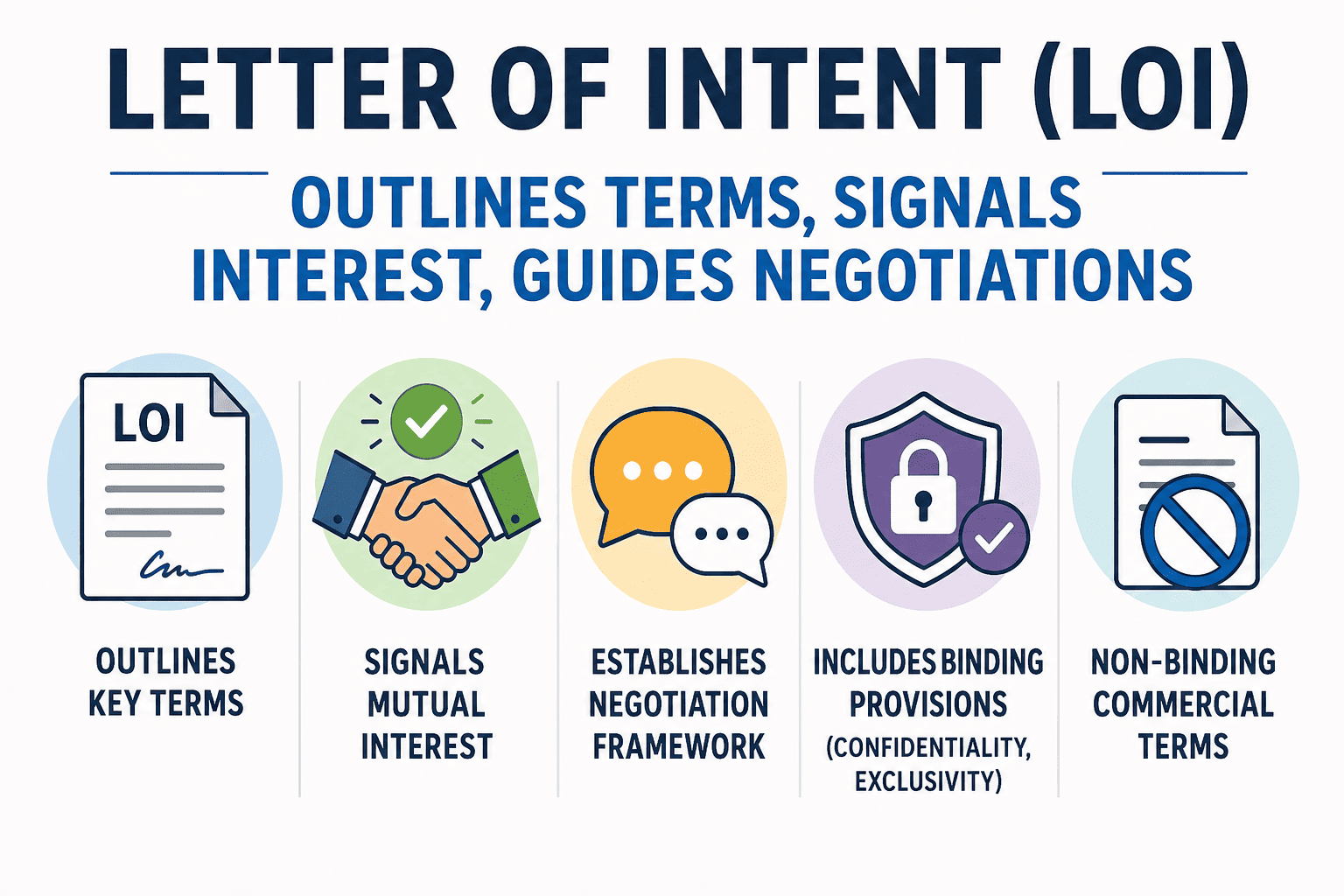
In international trade and partnership negotiations, an LOI appears at the stage where two parties have moved past initial interest but are not yet ready, or willing, to commit to a binding agreement. It performs a specific, practical function: it documents alignment on the key terms and creates a structured framework for due diligence and formal contract drafting, without either party bearing full contractual liability before they have fully evaluated the other.
Companies use LOIs to protect both sides during a period of significant information exchange. Before a manufacturer shares production costs and capacity details, or a distributor discloses their channel network, both parties need assurance that the conversation is serious and that disclosed information will be treated with discretion. The LOI provides that assurance, along with the specific terms it makes binding, while preserving commercial flexibility until the formal agreement is ready.
Common situations where an LOI is used include manufacturer-distributor partnerships, cross-border supply agreements, acquisitions and joint ventures, commercial real estate transactions, and franchise or licensing arrangements.
⚡ Key Principle
An LOI is not simply a polite expression of interest. It is a structured commercial document with specific legal implications. Treating it as informal, or signing it without review, is one of the most common and costly mistakes in international negotiations.
Binding vs Non-Binding
Binding vs Non-Binding: What an LOI Actually Commits You To
The most widely misunderstood aspect of a Letter of Intent is the assumption that it is either entirely binding or entirely non-binding. In practice, most professionally drafted LOIs are a hybrid: the commercial terms are non-binding, while certain protective clauses are explicitly binding. The document itself should make this distinction unambiguous for each provision.
✅ Typically Binding Clauses
- Confidentiality and non-disclosure obligations
- Exclusivity or lock-out period (if included)
- Governing law and jurisdiction
- Dispute resolution mechanism
- Break fee or cost allocation provisions
- No-solicitation of employees (if included)
⚠️ Typically Non-Binding Clauses
- Proposed transaction price or valuation
- Proposed commercial terms and conditions
- Payment structure and milestones
- Delivery timelines and logistics terms
- Product specifications and volume commitments
- Final deal structure and closing conditions
✨ Practical Guidance
Never assume a clause is non-binding simply because the LOI header says “non-binding.” Courts in multiple jurisdictions have found entire LOIs, or specific provisions within them, to be enforceable based on their specific language and the conduct of the parties. Every LOI should be reviewed by qualified legal counsel before execution.
Risks & Misunderstandings
Common Risks and Misunderstandings
🚩
Treating the LOI as a Final Agreement
A signed LOI does not mean the deal is done. Commercial terms remain subject to due diligence, legal drafting, and formal execution. Proceeding as if obligations are confirmed before the binding agreement is signed creates serious financial and operational exposure.
🚩
Over-Disclosing Before Confidentiality Is Binding
Sharing sensitive commercial information, pricing, product formulations, customer data, or channel details, before the confidentiality clause is formally in force leaves that information unprotected. Confirm binding NDA execution before substantive disclosure begins.
🚩
Assuming Exclusivity Exists Without an Explicit Clause
An LOI does not automatically prevent the other party from negotiating simultaneously with your competitors unless an explicit exclusivity clause with a defined period is included and marked as binding. Without it, you may invest in due diligence while the other party concludes a deal with a third party.
🚩
Unclear or Absent Governing Law
In international transactions, failing to specify which country’s law governs the LOI, and where disputes will be resolved, creates significant ambiguity if the relationship breaks down. This is especially critical in cross-border manufacturing and distribution agreements.
🚩
No Defined Expiry or Milestone Dates
An LOI without a defined expiry date or due diligence timeline can leave one party in indefinite limbo, unable to pursue other partners while the other delays without consequence. Always include milestone dates and an expiry provision.
LOI vs MoU vs Term Sheet
LOI vs MoU vs Term Sheet: Key Differences
These three documents are often used interchangeably in casual conversation, but they represent distinct instruments with different conventions, use cases, and legal implications.
| Dimension |
Letter of Intent (LOI) |
Memorandum of Understanding (MoU) |
Term Sheet |
| Primary Use |
Commercial transactions, supply deals, M&A, distribution |
Institutional or government partnerships, early-stage collaboration |
Investment, financing, venture capital, acquisition deal terms |
| Tone |
Formal; deal-oriented |
Collaborative; relationship-oriented |
Highly structured; finance-oriented |
| Binding Status |
Usually non-binding commercially; select clauses binding |
Usually non-binding; occasionally binding in specific provisions |
Non-binding commercially; binding procedural provisions common |
| Specificity |
Moderate, outlines commercial terms and intent |
Lower, establishes relationship framework and principles |
High, sets out specific economic and governance terms |
| Typical Length |
1–5 pages |
2–6 pages |
3–10 pages |
| Leads To |
Formal supply, distribution, or transaction agreement |
Joint operating agreement, partnership deed, or formal MoU |
Shareholders’ agreement, investment agreement, or SPA |
When to Move Forward
When to Move From an LOI to a Formal Agreement
An LOI is a transitional document. It should lead to a formal binding agreement within a defined timeframe. Understanding what needs to happen between signing the LOI and executing the final contract helps both parties plan due diligence and avoid unnecessary delay.
01
Due Diligence Is Completed
Both parties have reviewed the relevant commercial, financial, legal, and operational information about each other, and no material issues have emerged that would change the proposed terms.
02
Key Commercial Terms Are Finalised
Price, volume commitments, payment structure, delivery terms, exclusivity territory, and product specifications have been agreed in sufficient detail to allow a binding agreement to be drafted.
03
Legal Review Is Complete on Both Sides
Each party’s legal counsel has reviewed the proposed agreement structure, confirmed the binding provisions are enforceable in the relevant jurisdiction, and resolved any IP, liability, or regulatory issues.
04
Regulatory or Third-Party Approvals (If Required) Are in Progress
Where the transaction requires regulatory approval, government permits, or third-party consent, these processes have been initiated and their outcomes are understood before the formal agreement is executed.
05
The LOI Exclusivity Period Has Not Expired
If the LOI includes an exclusivity window, the formal agreement should be executed before that window closes, or the exclusivity period should be formally extended by mutual written agreement before proceeding.
FAQ
Frequently Asked Questions
Q
Is a Letter of Intent legally binding?
An LOI is typically non-binding in its commercial terms, neither party is obligated to complete the transaction. However, specific clauses within an LOI, such as confidentiality, exclusivity, and governing law provisions, can be explicitly made binding. The binding or non-binding status of each clause should be clearly stated in the document itself, and the document should be reviewed by qualified legal counsel before execution.
Q
What is the difference between an LOI and an MoU?
A Letter of Intent is more commonly used in commercial transactions, supply agreements, distribution deals, acquisitions, and tends to be specific about proposed commercial terms. A Memorandum of Understanding is more often used for institutional partnerships, government-to-government arrangements, or early-stage collaborations where establishing the relationship framework matters more than specifying transaction mechanics. In practice, the two documents are sometimes used interchangeably, which is why it is essential to review the specific content and provisions rather than rely on the title alone.
Q
When should an LOI be signed?
An LOI should be signed after initial negotiation has established enough alignment to warrant structured due diligence, but before either party has committed significant resources or disclosed sensitive commercial information without formal confidentiality protection. It marks the transition from exploratory conversation to structured evaluation, and it creates the framework within which the formal agreement will be negotiated.