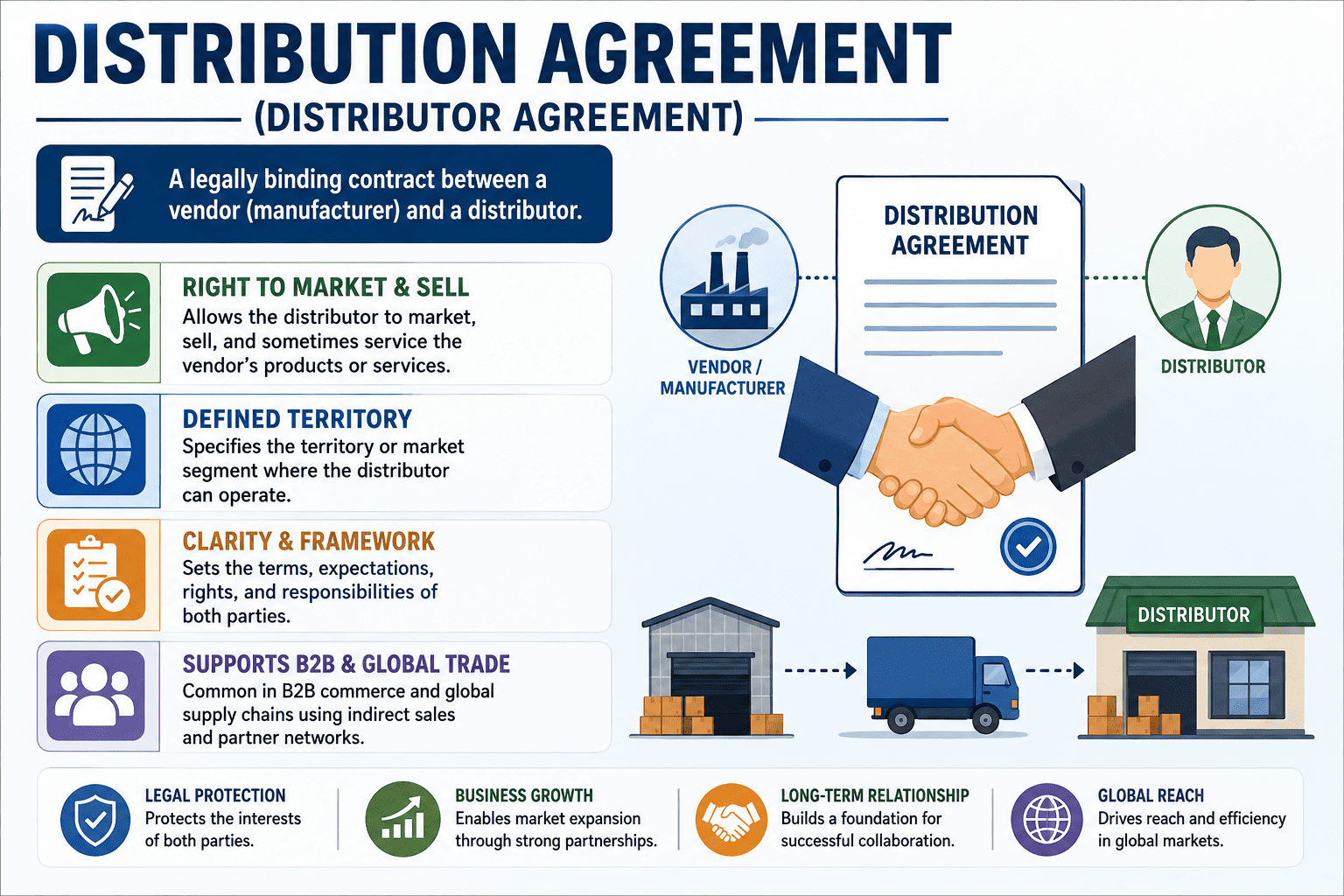
Why Distribution Agreements Matter in Business
In today’s global and digitally connected economy, companies often rely on third parties to reach broader markets. A well-structured distribution agreement facilitates market penetration and efficiency, vendors can scale more effectively without directly managing every market. It ensures brand consistency by governing how products are marketed, priced, and supported. It mitigates risk through clear contractual terms that reduce misunderstandings and litigation. And it ensures compliance by holding distributors to local regulatory standards and ethical guidelines.
📊 Key Statistic
According to industry research, over 70% of global trade flows through indirect channels, including distributors, resellers, and agents. A well-drafted distribution agreement can reduce channel conflict by up to 40% and improve margin predictability across territories.
Types of Distribution Agreements
Distribution agreements vary based on the level of exclusivity, the number of distributors, and the market strategy. Choosing the right type depends on the vendor’s goals, the product’s nature, and the target market’s characteristics.
| Type | Description | Best For | Key Consideration |
|---|
| Exclusive Distribution | The distributor is the sole representative in a defined territory. The vendor cannot appoint other distributors in that region. | Markets requiring significant investment in brand building and local presence. | Higher performance expectations; vendor loses flexibility; requires clear performance targets. |
| Non-Exclusive Distribution | Multiple distributors may operate in the same region, sometimes competing with each other. | High-volume consumer goods; markets where broad coverage is essential. | May create channel conflict; distributors may be less committed without exclusivity. |
| Selective Distribution | A small number of vetted distributors are appointed to maintain brand control and protect pricing integrity. | B2B and luxury markets; specialized technical products. | Requires strict selection criteria; may limit market coverage. |
| Intensive Distribution | Broad placement through as many outlets as possible to maximize visibility and sales. | Consumer goods (FMCG, snacks, beverages). | Low control over brand presentation; price competition may erode margins. |
📌 Note on Hybrid Models
Many vendors adopt hybrid strategies, combining exclusive distribution in key markets with non-exclusive arrangements in others. The agreement should clearly define the scope of exclusivity, including whether it applies to products, territories, or customer segments.
Key Elements of a Distribution Agreement
A comprehensive distribution agreement typically includes the following core components. Each element is designed to promote accountability, reduce ambiguity, and create a mutually beneficial relationship.
| Element | Description |
|---|
| Contract Term | Start and end dates, as well as renewal conditions. Typically 1-5 years, with options for extension. |
| Territorial Scope | Regions, countries, or market segments the distributor is authorized to serve. Defines geographic limits and any restrictions on cross-territory sales. |
| Product Scope | Specific products or product categories covered by the agreement. May include future product lines or exclude certain SKUs. |
| Exclusivity Clause | Defines whether the distributor is exclusive (sole representative) or non-exclusive in the territory. Critical for both parties’ market strategy. |
| Sales and Marketing Rights | Guidelines for advertising, trade shows, online sales, and lead generation. May include brand guidelines and approval requirements. |
| Trademark and IP Licensing | How logos, trademarks, and promotional assets may be used. Specifies ownership and permitted use of intellectual property. |
| Pricing and Payment Terms | Wholesale pricing structure, volume discounts, invoicing, and payment timelines. May include price adjustment mechanisms. |
| Performance Obligations | Sales targets, inventory levels, and service requirements. Often includes minimum purchase quantities or market development obligations. |
| Reporting and Analytics | Metrics, frequency, and methods of reporting performance or market data. Essential for monitoring compliance and market trends. |
| Warranty Clause | Guarantees the quality and performance of products. Defines the manufacturer’s obligations for defects and the distributor’s pass-through responsibilities. |
| Indemnification Clause | Shifts liability for third-party claims (e.g., IP infringement, product liability) from one party to the other. Critical for risk allocation. |
| Confidentiality | Both parties have a duty not to disclose confidential information to any third party without consent. |
| Termination Clause | Circumstances under which the agreement may be canceled (e.g., breach, insolvency, or mutual consent). Includes notice periods and post-termination obligations. |
| Dispute Resolution | Arbitration or legal processes to resolve disagreements. Specifies governing law and jurisdiction. |
Distributor vs. Dealer
Distributor Agreement vs. Dealer Agreement
While similar, distributor agreements and dealer agreements serve different roles in the supply chain. Understanding the distinction is essential for structuring the right channel strategy.
| Aspect | Distributor Agreement | Dealer Agreement |
|---|
| Role | Middleman between vendor and dealers/resellers | Sells directly to end customers |
| Partner | Manufacturer/vendor | Distributor |
| Focus | Logistics, warehousing, bulk sales | Retail sales, end-user support |
| Payment | Bulk pricing and inventory management | End-user pricing and service margins |
In a two-tier distribution model, a vendor supplies products to a distributor, which then provides goods to dealers, such as retailers, value-added resellers (VARs), or managed service providers (MSPs). Dealer agreements are essential in this model to define reseller behavior and end-user engagement terms.
How to Negotiate
How to Negotiate a Distribution Agreement
Negotiating an effective distribution agreement involves careful collaboration. The goal is to balance control and autonomy, ensuring brand protection without micromanaging the distributor.
1
Define Goals Upfront
Clarify revenue targets, expansion timelines, and territory priorities. Both parties should agree on what success looks like before drafting begins.
2
Vet the Distributor
Assess financial stability, market knowledge, and cultural fit. Conduct Due Diligence on the distributor’s track record, capabilities, and compliance history.
3
Involve Stakeholders
Include all stakeholders, legal, marketing, finance, and operations teams, in the negotiation process to ensure the agreement reflects the full business relationship.
4
Balance Control and Autonomy
Ensure brand protection without micromanaging the distributor. Define clear performance metrics and reporting requirements while allowing operational flexibility.
5
Draft with Clarity
Use precise, plain language and clearly defined terms. Avoid vague provisions that can lead to disputes. Specify what happens in case of Breach of Contract or Material Breach.
6
Plan for Audits and Accountability
Build in regular performance reviews, reporting requirements, and audit rights. This ensures ongoing compliance and provides early warning of issues.
7
Future-Proof the Contract
Account for pricing adjustments, product updates, and changes in local law. Include mechanisms for amending the agreement as the market evolves.
Contractual & Legal Considerations
Key Contractual Clauses in Distribution Agreements
Distribution agreements include standard terms that form the backbone of the relationship, establishing the legal and operational framework for all future transactions. These pre-negotiated clauses ensure consistency, compliance, and clarity across multiple transactions.
| Clause Category | Key Elements | Why It Matters |
|---|
| Exclusivity Clause | Defines whether the distributor is exclusive (sole representative) or non-exclusive in the territory. | Critical for both parties’ market strategy; affects investment and commitment levels. |
| Indemnification Clause | Shifts liability for third-party claims (e.g., IP infringement, product liability) from one party to the other. | Essential for protecting both parties from external claims and allocating risk appropriately. |
| Warranty Clause | Guarantees the quality and performance of products; defines manufacturer’s obligations for defects. | Protects the distributor and end customers; provides a clear remedy for non-conforming products. |
| Material Breach | Defines what constitutes a serious failure that allows the other party to terminate the contract. | Provides a clear threshold for termination; prevents minor issues from being used to exit the agreement. |
| Termination for Convenience | Allows a party to terminate without cause, typically with notice and sometimes compensation. | Provides flexibility if circumstances change; must be balanced with distributor’s investment protection. |
| Breach of Contract | Defines the consequences when a party fails to perform its obligations, including remedies and termination. | Provides a clear legal framework for addressing non-performance; essential for enforceability. |
| Consequential Damages | Indirect losses from a breach (e.g., lost profits), often waived or limited in commercial contracts. | Limits exposure to unforeseeable, catastrophic losses; a standard risk management tool. |
| Master Services Agreement (MSA) | Often used in conjunction with a distribution agreement to establish overarching terms for a long-term relationship. | Ensures consistency across multiple agreements; provides a legal foundation for the entire relationship. |
| Performance Monitoring | KPIs, reporting schedules, audit rights, dispute resolution mechanisms (mediation, arbitration). | Ensures accountability and quality; provides a clear path for resolving disputes without litigation. |
Real-World Example
Distribution Agreement Example: Technology Hardware Distribution
The following is a condensed example based on a typical distribution arrangement, illustrating how the key components come together in practice.
📄 Distribution Agreement: TechHardware Inc. & GlobalDistributors Ltd.
Parties: TechHardware Inc. (Manufacturer) and GlobalDistributors Ltd. (Distributor)
Territory: European Union and United Kingdom
Products: Enterprise networking equipment and peripherals
Exclusivity: Exclusive for first 2 years; non-exclusive thereafter if performance targets not met
Performance Targets: €5 million in first year, €8 million in second year
Payment Terms: Net 45 days from invoice; 2% discount for early payment within 10 days
Warranty: 24 months from delivery; distributor passes through manufacturer’s limited warranty to end customers
Term: 3 years, renewable by mutual agreement
Key Clauses: Indemnification for IP infringement, confidentiality of technical data, termination for convenience with 90 days’ notice, and arbitration under ICC rules.
Risks & Mitigation
Common Risks in Distribution Agreements & How to Mitigate Them
⚠️
Channel Conflict
Mitigation: Define clear territories and customer segments. Include conflict resolution procedures. Use exclusive or selective distribution to limit overlap. Conduct regular Commercial Due Diligence to understand market dynamics.
⚠️
Margin Erosion and Price Competition
Mitigation: Set minimum resale prices where legally permissible. Include pricing integrity clauses. Monitor market pricing and enforce MAP (Minimum Advertised Price) policies.
⚠️
Underperformance by Distributor
Mitigation: Include clear performance targets and reporting requirements. Reserve the right to terminate exclusivity or the agreement if targets are not met. Provide support and training to help distributors succeed.
⚠️
Intellectual Property Infringement
Mitigation: Include clear IP ownership and licensing provisions. Require the distributor to report any suspected infringement. Include an Indemnification Clause for third-party IP claims.
FAQ
Frequently Asked Questions About Distribution Agreements
QWhat is a Distribution Agreement?
A Distribution Agreement is a legally binding contract between a vendor or manufacturer and a distributor. It outlines the terms under which the distributor may market, sell, and sometimes service the vendor’s products or services within a defined territory or market segment. It serves as the framework for managing the business relationship, ensuring clarity on expectations, rights, and responsibilities.
QWhat are the main types of distribution agreements?
The main types are: Exclusive Distribution (one distributor per territory), Non-Exclusive Distribution (multiple distributors may operate in the same region), Selective Distribution (small number of vetted distributors), and Intensive Distribution (broad placement through many outlets). Each strategy affects the legal structure and expectations outlined in the agreement.
QWhat are the key clauses in a Distribution Agreement?
Key clauses include: Territory, Product Scope, Exclusivity, Pricing and Payment Terms, Performance Obligations (sales targets), Intellectual Property Licensing, Confidentiality, Warranty, Indemnification, Termination, and Dispute Resolution. These terms promote accountability, reduce ambiguity, and create a mutually beneficial relationship.
QWhat is the difference between a distributor agreement and a dealer agreement?
A distributor agreement governs the relationship between a vendor and a distributor, who acts as a middleman buying in bulk and reselling to dealers or resellers. A dealer agreement governs the relationship between a distributor and a dealer, who sells directly to end customers. Distributors focus on logistics, warehousing, and bulk sales, while dealers focus on retail sales and end-user support.
QHow long should a distribution agreement typically last?
Distribution agreements typically last 1-5 years, depending on the industry, product lifecycle, and market dynamics. Longer terms are common for products requiring significant investment in market development, while shorter terms are used for fast-moving consumer goods. The agreement should include renewal conditions and provisions for renegotiation.
QCan a distributor appoint sub-distributors under a distribution agreement?
This depends on the terms of the agreement. Many distribution agreements prohibit the appointment of sub-distributors without the manufacturer’s prior written consent. If sub-distribution is permitted, the agreement should specify the conditions, including the sub-distributor’s obligations and the distributor’s liability for their actions.