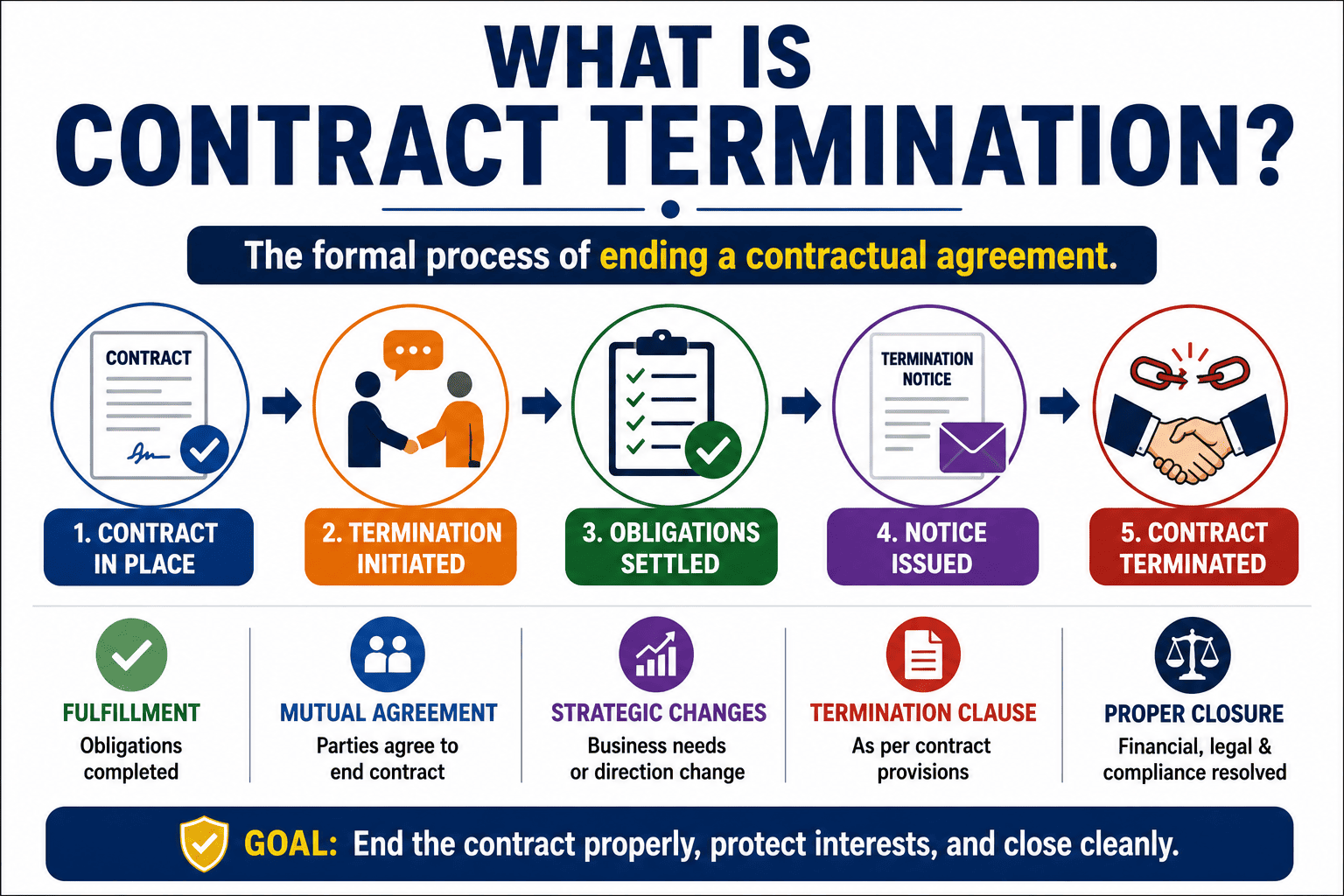
Why Contract Termination Matters
Contract termination is never the goal,but knowing when, why, and how to end a contract properly can save your business from unnecessary risk and disputes. Not all contracts will stand the test of time. Contracts break down for a variety of reasons, and this often results in a contract being terminated. Proper termination ensures that parties can exit relationships responsibly, maintain compliance, protect financial interests, and ensure operational continuity.
📊 Key Statistic
Organizations typically hold 20,000 to 40,000 contracts at a time. When companies manage contracts manually, they can have a difficult time keeping track of them all, often missing renewal and termination opportunities, and losing significant revenue. A structured termination process is essential for effective contract portfolio management.
Types of Contract Termination
Contract termination can unfold in various forms, depending on the circumstances and agreements between the parties involved. Understanding the different types is crucial for choosing the right approach.
| Termination Type | What It Means | Key Considerations |
|---|
| Termination for Cause | Occurs when one party breaches the contract or fails to meet the contractual terms (e.g., non-payment, failure to deliver). | Requires evidence of breach, cure periods, and materiality thresholds. Often leads to claims for damages. |
| Termination for Convenience | Allows a party to end the contract for reasons other than breach, if the contract includes such a clause. | Common in government contracts. Requires proper notice and may involve fees or wind-down obligations. |
| Mutual Termination | Both parties agree to dissolve the contract, usually without any party breaching it. | Often due to changed circumstances or strategic shifts. Requires written agreement and final settlement. |
| Expiration | The contract ends when the stated term runs out. | Check renewal language, notice deadlines, and surviving obligations. Natural conclusion without legal action. |
| Impossibility / Frustration | Unforeseen events make performance impossible or illegal (e.g., force majeure, new laws). | Doctrine of frustration applies. Contract becomes void when the act becomes impossible or unlawful. |
📌 Important Note
Termination does not always end every obligation. Confidentiality, payment, indemnity, audit, dispute resolution, and other survival clauses may continue after the main commercial relationship ends.
Termination Process
How to Terminate a Contract: 3-Step Approach
A successful contract termination strategy involves three key steps: identifying underperforming contracts, writing a professional termination notice, and ensuring proper financial closeout. Using contract management software can significantly streamline this process.
1
Identify Underperforming Contracts
Analyze KPIs, track deliverables and payments, and use a risk assessment matrix to visualize risks like revenue loss, reputation exposure, and confidentiality issues.
2
Write a Contract Termination Letter
Use pre-built templates, include dynamic clauses (e.g., early termination fees), and send the termination letter directly from your contract management system for a clear record.
3
Ensure Financial Closeout
Track budget vs. spend, review transaction history, and analyze financial data after termination to inform strategies for future contracts.
Termination Notice & Legal Aspects
Termination Notice and Legal Remedies
Contract termination often starts with a formal termination notice or letter, with the terms and conditions for delivering this notice being outlined within the agreement. If a dispute arises, parties may turn to various remedies.
| Aspect | Description |
|---|
| Termination Notice | A formal communication expressing the intention to terminate a contract, stating the grounds, referencing contractual clauses, and specifying the termination date. |
| Compensatory Damages | Financial compensation to cover losses that result from the breach, intended to put the aggrieved party in the position they would have been in if the contract had been performed. |
| Specific Performance | A court order requiring the breaching party to fulfill their contractual obligations, used when monetary damages are inadequate. |
| Liquidated Damages | A specified, predetermined amount of damages agreed upon in the contract, which must be reasonable and proportional to the potential harm. |
| Rescission (Restitution) | The contract is canceled, and the parties are restored to their pre-contractual positions, unwinding the transaction. |
| Dispute Resolution | Mechanisms like negotiation, mediation, arbitration, or litigation to address disputes arising from termination validity or compensation. |
Real-World Example
Contract Termination Example: Breach of Service Agreement
The following is a condensed example illustrating how a termination for cause might unfold in a typical commercial scenario.
📄 Termination Scenario: Software Service Provider
Background: A company (Client) enters into a 3-year service agreement with a software vendor (Provider) for ongoing updates and support.
Breach: After 18 months, the Provider consistently fails to deliver updates and support as stipulated, causing significant operational disruption for the Client.
Termination: The Client reviews the contract, confirms a material breach, and sends a formal termination notice citing the breach and providing a 30-day cure period as required by the contract.
Remedy: The Provider fails to cure the breach. The Client terminates for cause, and the contract’s dispute resolution clause leads to arbitration, where the Client is awarded compensatory damages for the operational losses.
Contractual & Legal Context
Key Contractual Clauses Related to Termination
Termination clauses are provisions in a contract that outline the process and conditions for either party to end the agreement. Clear termination clauses help prevent disputes and provide a straightforward exit strategy.
| Clause | How It Relates to Termination |
|---|
| Termination for Convenience | Allows a party to terminate without breach, often requiring specific notice and potentially involving fees. |
| Material Breach | Defines what constitutes a serious failure that allows the other party to terminate the contract. |
| Cure Period | A time window given to a party to fix a breach before the other party can terminate the contract. |
| Breach of Contract | Defines the consequences when a party fails to perform its obligations, including termination and remedies. |
| Indemnification Clause | May require one party to compensate the other for losses arising from termination or breach. |
| Warranty Clause | Guarantees that goods/services meet standards, and breach of warranty can be grounds for termination. |
| Limitation of Liability | Caps the total liability a party can incur, which can limit damages recoverable upon termination. |
| Consequential Damages | Indirect losses from a breach or termination, often waived or limited in commercial contracts. |
| Arbitration Clause | Specifies how disputes arising from termination will be resolved, avoiding court litigation. |
Risks & Mitigation
Common Risks in Contract Termination & How to Mitigate Them
⚠️
Wrongful Termination Claim
Mitigation: Ensure you have a valid ground for termination (e.g., material breach) and follow the contract’s notice procedure exactly. Document all evidence and consult legal counsel.
⚠️
Missed Notice Deadlines
Mitigation: Set up automated contract reminders in your CLM system. Track all key dates and notice periods meticulously.
⚠️
Unclear Surviving Obligations
Mitigation: Review the contract’s survival clause carefully. Ensure confidentiality, indemnity, and dispute resolution obligations continue after termination.
FAQ
Frequently Asked Questions About Contract Termination
QWhat are the different types of contract termination?
There are several types: Termination for Cause (due to breach or non-performance), Termination for Convenience (without breach, if contract allows), Mutual Termination (both parties agree), Expiration (natural end of term), and Termination by Impossibility or Frustration.
QWhat is a termination for cause clause?
A termination for cause clause allows one party to end the contract if the other party fails to meet their obligations, such as non-payment, failure to deliver services, or any significant violation of the agreement’s terms.
QWhat is the difference between contract termination and contract expiration?
Contract expiration occurs when the agreement reaches the end of its term as originally stipulated, concluding all obligations as planned. Contract termination involves actively ending the contract before the agreed-upon expiration date, which can be due to breach, convenience, or mutual agreement.
QWhat should be included in a contract termination letter?
A termination letter should include: your contact information and the date, recipient’s contact information, a subject line clearly stating the purpose, contract identification, a clear statement of termination, reference to the termination clause (if applicable), the reason for termination (optional), the termination date, next steps (if any), and a signature.
QWhat happens if you terminate a contract incorrectly?
If you attempt to terminate a contract without sufficient grounds or incorrectly, you could face a claim for wrongful termination. The counterparty may be able to make a claim against you for damages resulting from the improper termination.