Why Gross Negligence Matters in Business & Law
Understanding gross negligence is critical because it represents a threshold where liability shifts from simple carelessness to conduct that can result in significantly higher damages, including punitive damages, and even criminal charges. In commercial contracts, allegations of gross negligence can bypass standard limitation of liability clauses, making it one of the most heavily negotiated concepts in Master Services Agreements (MSAs), indemnification clauses, and other risk allocation provisions.
⚖️ Key Legal Principle
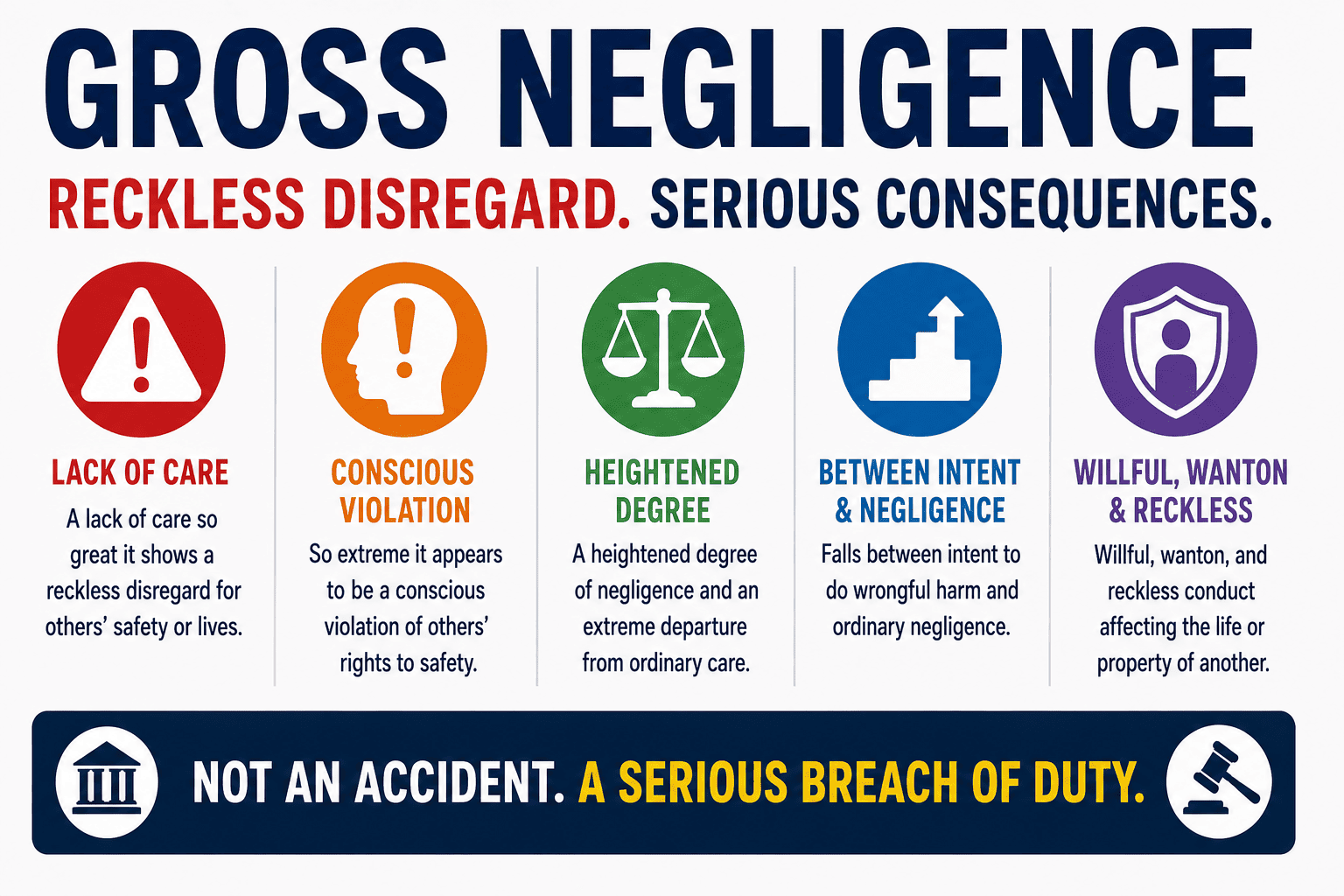
Gross negligence is more than simple inadvertence, but it falls just short of being intentionally evil. It implies a thoughtless disregard of consequences and the failure to use even slight care to avoid harming the life or property of another. When found, it can result in the award of punitive damages on top of general and special damages.
Negligence vs. Gross Negligence: The Critical Difference
The distinction between ordinary negligence and gross negligence is a matter of degree, but the legal consequences are vastly different. While ordinary negligence involves a failure to exercise reasonable care, gross negligence represents a conscious and reckless disregard for the safety or rights of others.
| Characteristic | Ordinary Negligence | Gross Negligence |
|---|
| Definition | Failure to exercise the level of care that a reasonable person would in similar circumstances. | Reckless disregard for safety or lives, representing an extreme departure from the ordinary standard of care. |
| Mental State | Carelessness, oversight, or inadvertence. | Willful, wanton, and reckless conduct; conscious violation of others’ rights. |
| Degree of Deviation | Minor to moderate departure from expected care. | Extreme and flagrant departure from the standard of care. |
| Legal Consequences | Typically civil liability; compensatory damages. | Can lead to punitive damages, criminal charges, and higher liability exposure. |
| Example | Running a red light due to a momentary distraction. | A parent leaving a 2-year-old alone in a house with an unfenced pool. |
| Contractual Impact | May be subject to liability caps and waivers. | Often carved out from limitation of liability and consequential damages waivers. |
Real-World Examples of Gross Negligence
The following scenarios illustrate how gross negligence is applied in practice, distinguishing it from ordinary negligence.
| Scenario | Why It Constitutes Gross Negligence |
|---|
| Leaving a child alone near a pool | A parent leaving a toddler alone in a home with a swimming pool demonstrates a conscious disregard for the child’s safety, knowing the severe risk of drowning. This goes far beyond ordinary carelessness. |
| Nursing home ignoring bed bug infestation | Medical staff failing to recognize or treat a severe bed bug infestation, despite family concerns, shows a reckless indifference to residents’ health and well-being, especially when trained professionals should have identified the issue. |
| Shipping tainted toothpaste knowingly | A CEO who learns that industrial bleach was added to a product batch but decides to ship it anyway to avoid costs exhibits a willful disregard for consumer safety. This is a classic case of gross negligence leading to criminal charges. |
| Medical professional working while severely impaired | A surgeon performing a procedure while under the influence of alcohol or drugs demonstrates a reckless disregard for patient lives, far exceeding any ordinary error in medical judgment. |
📌 Key Insight
The critical factor in these examples is knowledge of the risk combined with a conscious decision to proceed anyway. This is what elevates the conduct from negligence to gross negligence.
Gross Negligence in Contracts
How Gross Negligence Affects Commercial Contracts
In commercial agreements, the concept of gross negligence is a key battleground in risk allocation. Standard clauses often include exceptions for gross negligence, meaning liability cannot be capped or waived for such conduct.
| Contract Clause | Typical Treatment of Gross Negligence | Why It Matters |
|---|
| Limitation of Liability | Often excludes liability arising from gross negligence, fraud, or willful misconduct. The cap does not apply. | Without this carve-out, a party could limit its liability for catastrophic harm caused by its own reckless conduct. |
| Indemnification | Indemnity obligations typically cover third-party claims, and gross negligence by the indemnifying party may not be covered. | Parties want to ensure they are protected from claims caused by the other party’s gross negligence. |
| Consequential Damages Waiver | Mutual waivers of consequential damages often include an exception for gross negligence. | This allows recovery of indirect losses like lost profits if they result from a party’s gross negligence. |
| Breach of Contract | A material breach caused by gross negligence may be treated more severely, potentially leading to termination for cause and full damages. | It provides a strong remedy for the non-breaching party and a deterrent against reckless behavior. |
| Exclusivity Clause | If a party’s gross negligence leads to a breach of exclusivity, the remedy may include enhanced damages. | It reinforces the seriousness of the exclusive relationship. |
Drafting & Mitigation
Drafting Considerations: Defining & Excluding Gross Negligence
Because gross negligence has no single, universally accepted definition, contracts often define it explicitly. This is crucial because courts will interpret the term based on the contract language and the specific facts. A well-drafted clause provides clarity and reduces litigation risk.
1
Define Gross Negligence in the Agreement
Provide a specific definition that is clear and objective. For example: “Gross Negligence” means an act or omission that constitutes a reckless disregard for the consequences of such act or omission, to the substantial detriment of the other party.
2
Exclude Gross Negligence from Liability Caps
Ensure that the limitation of liability clause explicitly states that the cap does not apply to losses resulting from a party’s gross negligence, fraud, or willful misconduct.
3
Carve Out from Consequential Damages Waivers
Add an exception to the consequential damages waiver for claims arising from gross negligence, allowing recovery of indirect losses like lost profits or business interruption.
4
Include in Indemnification Provisions
Specify that indemnification obligations do not apply to claims caused by the indemnified party’s gross negligence, or set a separate cap for such claims.
5
Consider Insurance Implications
Most general liability insurance policies exclude coverage for claims arising from gross negligence. Ensure your contract risk allocation aligns with your insurance coverage.
Risk & Liability
Risks Associated with Gross Negligence Claims
⚠️
Uncapped Liability Exposure
If the liability cap is carved out for gross negligence, a single reckless act could expose a party to damages far exceeding the contract value. This is why parties are often reluctant to agree to broad definitions of gross negligence.
⚠️
Punitive Damages
In many jurisdictions, a finding of gross negligence can justify an award of punitive damages, which are intended to punish the wrongdoer and deter future conduct. These are typically not covered by insurance.
⚠️
Reputational Harm
Allegations or findings of gross negligence can severely damage a company’s reputation, especially in industries like healthcare, aviation, and financial services, where safety and trust are paramount.
⚠️
Dispute Resolution Challenges
Whether conduct rises to the level of gross negligence is often a highly contested factual issue, requiring extensive discovery and expert testimony, which increases litigation costs and uncertainty. A well-drafted arbitration clause or mediation clause can help manage this risk.
⚠️
Insurance Coverage Gaps
Standard CGL and professional liability policies often exclude coverage for gross negligence. This means companies may face uninsured liability, making it critical to assess risk exposure and consider specialized coverage.
How to Mitigate Gross Negligence Risk
Companies can take proactive steps to reduce their exposure to gross negligence claims:
- Implement Robust Compliance Programs: Documented policies, regular training, and clear reporting channels demonstrate a culture of compliance.
- Maintain Accurate Documentation: Detailed records of decisions, warnings, and actions taken can help refute claims of reckless disregard.
- Conduct Regular Audits and Due Diligence: Periodic reviews can identify potential risks before they escalate. For partnerships, use commercial due diligence and general due diligence processes.
- Negotiate Clear Contract Language: Define gross negligence precisely and limit carve-outs to intentional or truly egregious conduct.
- Secure Appropriate Insurance: Work with your broker to understand coverage limitations and consider purchasing excess or specialized liability policies.
FAQ
Frequently Asked Questions About Gross Negligence
QWhat is the difference between negligence and gross negligence?
Negligence is a failure to exercise the level of care that a reasonable person would in similar circumstances, often resulting from carelessness or oversight. Gross negligence is a much higher degree of carelessness that involves reckless disregard for the safety or lives of others, going beyond simple inadvertence and approaching intentional wrongdoing. Gross negligence is willful, wanton, and reckless conduct.
QCan gross negligence lead to criminal charges?
Yes, when gross negligence is established, it can result in criminal charges being filed. Unlike ordinary negligence, which is typically handled in civil courts, gross negligence often involves intentional circumvention of expected practices with knowledge that serious harm, injury, or even death could result. This can lead to criminal prosecution and, if found guilty, stiffer punishments.
QHow does gross negligence affect commercial contracts?
In commercial contracts, gross negligence is a critical concept. Many
limitation of liability and
indemnification clauses include exceptions for gross negligence, meaning a party cannot avoid liability for damages caused by their grossly negligent acts. Additionally,
consequential damages waivers often carve out claims arising from a party’s gross negligence, fraud, or willful misconduct.
QIs gross negligence defined the same way in every jurisdiction?
No, the definition and legal treatment of gross negligence vary by jurisdiction. Some jurisdictions define it by statute, while others rely on common law. In civil law countries, the concept may not be recognized at all; instead, fault is categorized by degrees. This is why it is essential to include a
governing law clause and
dispute resolution mechanism in cross-border contracts to provide clarity and predictability.
QCan a party waive liability for its own gross negligence?
Generally, no. Courts often view attempts to exculpate a party from liability for its own gross negligence as against public policy and unenforceable. Such waivers are often deemed unconscionable. However, sophisticated parties can agree to limitations on liability that exclude gross negligence, which effectively shifts the risk of such conduct to the party committing it. It is crucial to include explicit carve-outs and define the scope of the limitation clearly.