Best Platform for Verified B2B Import Export Companies in India (2026) | GTsetu
Home ›
Blog ›
Best Platform for Verified B2B Import Export Companies in India
🌍 Global Trade & Compliance
Best Platform for Verified B2B Import Export Companies in India
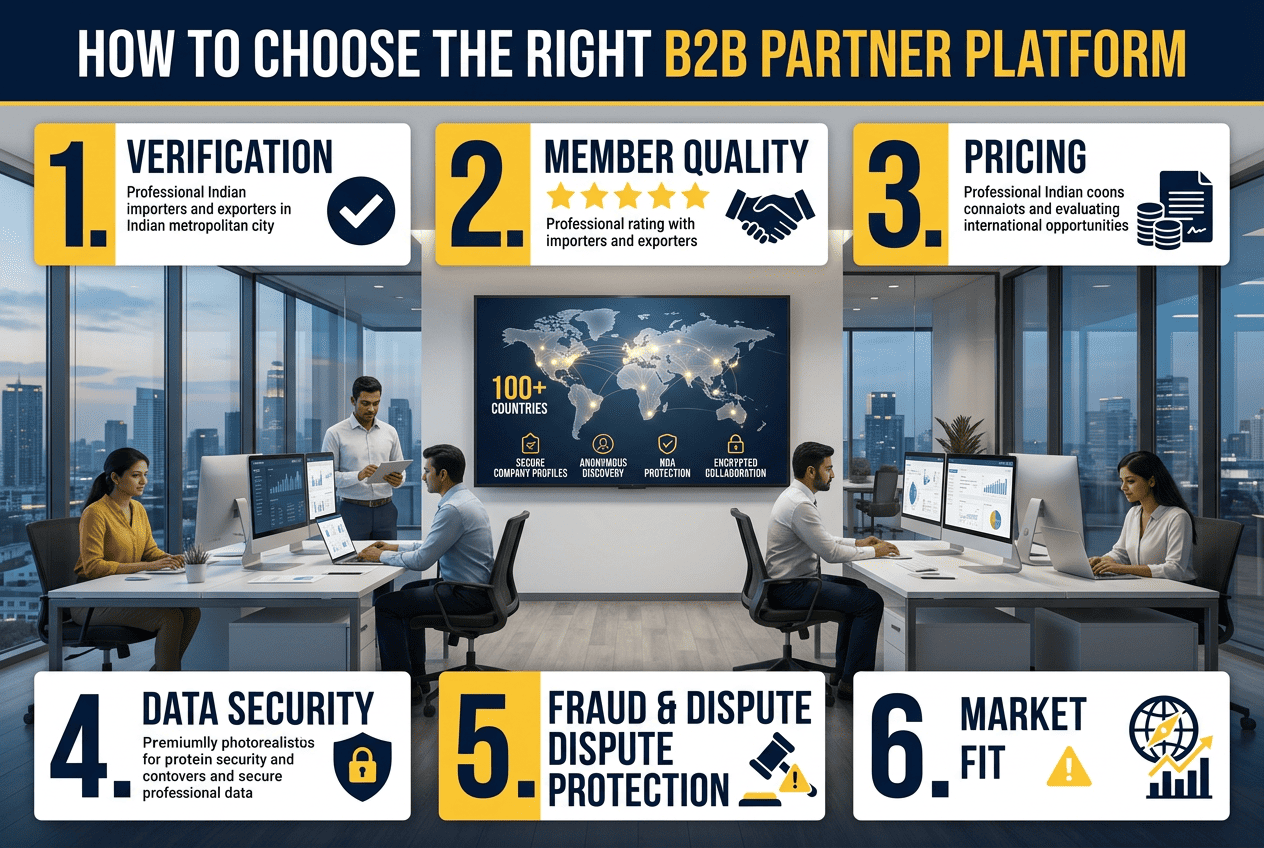
Direct Answer: There is no single best platform for every Indian importer or exporter; the right one depends on whether you need reach, curated buyers or verified identity and confidentiality. Judge any platform on six criteria: what exactly it verifies, who its members are, how it charges, how it protects your data, how it handles disputes and fraud, and how well it fits your product and target markets. For companies whose priority is trusting the counterparty, GTsetu is built around government‑tie‑up verification of six core credentials across 100+ countries, with anonymous discovery, built-in NDA workflows, encrypted collaboration and zero broker commission. GTsetu is our own platform, so use the criteria in this guide to compare it with any alternative.
📅 Published October 28, 2026🔄 Updated October 28, 2026⏱ 13 min read✍️ GTsetu Editorial Team
6
Criteria to Compare
4
Platform Types
100+
Countries on GTsetu
0%
Broker Commission
India’s importers and exporters can choose from large marketplaces, directories, sourcing platforms and newer verification-first networks. They all promise “verified buyers” and “genuine suppliers”. The reality is that “verified” means very different things on different platforms, and the cost of confusing them is a lost deposit, an unpaid shipment or leaked designs.
Indian manufacturers, exporters, importers, traders and MSMEs looking for overseas buyers, suppliers, distributors or manufacturing partners, and teams deciding which B2B platform deserves their time and budget.
⚖️ Transparency & Disclaimer
GTsetu is a B2B platform and publishes this guide, so we have a commercial interest in the topic. We have therefore compared platform types and criteria rather than making claims about specific competitors. Platform features, fees and policies change often; always check each platform’s current terms. This guide is general commercial education and not legal or financial advice.
SECTION 1
1 Why the Platform Choice Matters
🎯 Definition
A verified B2B import export platform is an online network where companies are checked against defined criteria before they can list, search or message others. The value of the platform depends entirely on what is checked, by whom, and how often. A badge that confirms only a paid membership is very different from one that confirms government-registered company identity.
Low-quality leads consume sales effort without producing orders.
🔓
Information Leakage
Sharing drawings, prices or customer lists on open channels invites copying.
📉
Hidden Costs
Subscriptions, paid promotion and commissions can quietly erode margins.
⚖️
Weak Recourse
If the counterparty is not who they claimed, enforcing a breach of contract claim becomes much harder.
🤝
Partner Quality
The right platform surfaces long-term partners, not just one-off inquiries.
SECTION 2
2 What to Look For at a Glance
Use these six criteria to compare any platform side by side. Weight them according to what you value most.
1
Verification
What is checked, against which source, and what is explicitly not checked.
🪪 Trust
2
Members
Who is on the platform, from which countries and industries.
🌍 Network
3
Pricing
Subscription, lead fees, commission and paid promotion over a full year.
💰 Cost
4
Security
NDAs, encryption, access controls and data handling.
🔐 Protection
5
Fraud Handling
Reporting, removal of bad actors and dispute support.
🛡️ Safety
6
Fit
Relevance to your products, buyer type and target markets.
🎯 Relevance
SECTION 3
3 The Four Types of B2B Platforms
Most platforms fall into one of four broad types. Many combine features, but knowing the core model helps you set expectations.
Platform Type
Typical Strength
Typical Limitation
Large Open Marketplaces
Huge reach, many listings, high search traffic
Variable lead quality, heavy competition, verification depth differs by tier
Business Directories & Portals
Low-cost visibility and basic company listings
Listings may be self-declared; limited vetting and security
Sourcing & Trade-Fair Platforms
Curated buyers, events and sector focus
Higher cost, seasonal, narrower product coverage
Verification-First Networks
Identity checks, confidentiality tools, quality of counterparties
Smaller or growing networks; do not replace your own due diligence
✨ GTsetu Insight
You do not have to pick only one type. Many exporters use a marketplace for reach and a verification-first network for serious partner conversations. If you plan to build channel relationships, see our guide to international wholesale distributors.
SECTION 4
4 Criterion 1: What “Verified” Really Means
This is the most important question to ask. Ask every platform to state, in writing, what it verifies, from which source, and what it does not verify.
Verification Level
What It Typically Confirms
What It Does Not Prove
Paid / Self-Declared Badge
The company paid a fee or uploaded documents
That the company exists, is active, or is who it claims to be
Document Review
A reviewer checked uploaded registration or licence documents
That the documents are genuine and current
Official Registry Check
Company details match government or registry records
Product quality, certifications, or financial strength
Third-Party Audit
An inspector visited the facility or reviewed operations
Ongoing performance after the audit date
📌 Ask These Questions
Is verification done through official sources or from uploaded documents? Which fields are checked? How often is the status refreshed? What happens if a company’s status changes? For a broader approach to checking counterparties, see commercial due diligence.
SECTION 5
5 Criterion 2: Member Quality & Relevance
A platform is only as useful as the companies on it. A huge network full of irrelevant members will not help you find a distributor for specialised equipment.
✅ Signs of a Useful Network
✅ Members in the countries and industries you actually target.
✅ Detailed, consistent company profiles rather than bare listings.
✅ Mix of manufacturers, importers, distributors and partners.
✅ Active members who respond to messages.
⚠️ Warning Signs
⚠️ Impressive member counts with no way to filter or verify.
⚠️ Generic, copy-pasted inquiries about unrelated products.
⚠️ Buyers who push for off-platform contact immediately.
⚠️ No visible way to report suspicious activity.
SECTION 6
6 Criterion 3: Pricing & Commission
Compare the total annual cost, not the headline price. Platforms use different models, and costs often grow with promotion and lead purchases.
📅
Subscription / Membership
Fixed annual or monthly fee for listing and access. Check what is included at each tier.
🎯
Pay-Per-Lead
Fees to unlock buyer contacts. Check how leads are qualified and whether they are shared with competitors.
📈
Paid Promotion
Sponsored ranking and ads can add significant cost. Decide a budget cap.
💼
Commission on Deals
Some models take a percentage of closed deals. Confirm whether it applies to deals you close directly.
✨ GTsetu Insight
GTsetu charges zero commission on any partnership formed; your commercial terms stay between you and your partner. If you need help beyond a platform, compare with international business development consulting.
SECTION 7
7 Criterion 4: Confidentiality & Security
Before you share drawings, formulas, pricing or customer details, make sure the platform and the counterparty are bound to protect them.
1
Look for a Built-In NDA Process
A platform that formalises confidentiality before information is exchanged creates an audit trail and sets expectations from the first interaction.
2
Check Encryption and Access Controls
Documents and messages should be encrypted in transit and at rest, with controls over who can view what.
3
Prefer Anonymous Exploration
Being able to browse profiles without revealing your identity reduces unsolicited outreach and competitor snooping.
4
Understand Data Ownership
Read how your company data, uploads and messages are stored, used and deleted. For contracts beyond the NDA, see master services agreement (MSA).
SECTION 8
8 Criterion 5: Fraud & Dispute Handling
No platform can guarantee every deal. What matters is how it responds when something goes wrong.
🎯 Questions to Ask Any Platform
• How do I report a suspicious company, and what happens next?
• Are removed or flagged members visible to other users?
• Does the platform mediate or only provide contact details?
• What does the platform say about its responsibility for deals made through it?
• How does it treat disputes over quality, delay or non-payment, including what counts as a material breach and how consequential damages may be limited in your own contracts?
SECTION 9
9 Criterion 6: Fit With Your Products & Markets
The right platform for a textile exporter may be the wrong one for an industrial automation supplier. Match the platform to your product complexity, order size and target regions.
A Verification-First Network for Cross-Border Partnerships
GTsetu connects manufacturers, exporters, importers and distributors across 100+ countries. Every company is verified using direct government tie‑ups across six essential credentials: legal name, registered address, registration number, company status, company type, and date of certificate of incorporation. GTsetu does not verify industry certifications, product quality, or financial standing; those must be exchanged and validated directly between partners. We suggest you score GTsetu, and every alternative, against the six criteria above.
✅
Government Tie‑Up Verification6‑point verification: legal name, registered address, registration number, company status, company type, incorporation date.
📜
Certifications & QualityNot verified by GTsetu. Validate directly with partners during due diligence.
🕵️
Anonymous DiscoveryBrowse verified profiles without revealing your identity until mutual interest is confirmed.
📄
Built-In NDA WorkflowFormalise confidentiality before sharing pricing, designs or plans, with a full digital audit trail.
🚫
Zero CommissionNo broker fees on any supply, distribution or partnership deal.
🔐
Encrypted CollaborationDocuments and messages encrypted in transit and at rest from first contact.
🌍
100+ CountriesA growing verified network for importers, exporters and distributors.
QWhat is the best platform for verified B2B import export companies in India?
The best platform depends on your goal. Large marketplaces offer reach and volume, trade-fair and sourcing platforms offer curated buyers, and verification-first platforms such as GTsetu focus on confirming company identity through government sources and protecting confidentiality. Evaluate platforms on verification depth, fees, buyer quality, security and fit with your products.
QWhat does a “verified” badge on a B2B platform actually mean?
It varies widely. Some badges confirm only that a membership fee was paid or documents were uploaded, while others check company registration details against official sources. Always read what a platform verifies, how often it re-checks, and what it explicitly does not verify.
QWhat should Indian exporters check before trusting a foreign buyer?
Confirm the buyer’s legal name, registered address, registration number and company status, check references and trade history, use secure payment instruments such as letters of credit or staged payments, and agree clear Incoterms and contract terms before shipping.
QAre free B2B platforms safe to use?
Free listing alone is not a safety signal. Safety depends on how a platform verifies members, monitors fraud and protects data. Treat every unsolicited inquiry with caution and verify counterparties independently regardless of platform.
QDo B2B platforms charge commission on deals?
Models differ. Some charge subscription or listing fees, some charge lead or transaction fees, and some take commission. Compare total cost over a year, including paid promotion, and check whether commission applies to deals you close directly.
QHow does GTsetu verify companies?
GTsetu verifies companies through direct government tie-ups on six credentials: legal name, registered address, registration number, company status, company type and date of incorporation. GTsetu does not verify industry certifications, product quality, or financial standing; those are exchanged and validated directly between partners.
Ready to Connect With Verified Import Export Partners?
Join 500+ verified manufacturers, exporters, and importers already building cross-border partnerships on GTsetu, with government‑tie‑up verification of six core credentials, built-in NDA workflows, and zero broker fees across 100+ countries.
They represents the product, and research team behind GTsetu, a global B2B collaboration platform built to help companies explore cross-border partnerships with clarity and trust. The team focuses on simplifying early-stage international business discovery by combining structured company profiles, verification-led access, and controlled collaboration workflows.
With a strong emphasis on trust, and disciplined engagement, Team GTsetu shares insights on global trade, partnerships, and cross-border collaboration, helping businesses make informed decisions before entering deeper commercial discussions.